

Authored by Recovery HQ
September 22, 2025
When it comes to addiction treatment, there is no one-size-fits-all solution. Recovery is a personal journey, and the right level of care can make all the difference. Two of the most effective and flexible treatment options available today are Partial Hospitalization Programs (PHP) and Intensive Outpatient Programs (IOP).
These programs bridge the gap between full-time residential treatment and traditional outpatient care, offering structure, support, and clinical expertise—while allowing clients to live at home or in a sober living environment.
At Recovery HQ, we believe that understanding the benefits of PHP and IOP can help individuals and families make informed decisions about the next step in their recovery journey. In this article, we’ll explore how these programs work, their key advantages, and why they’ve become a cornerstone in modern addiction and mental health treatment.
A Partial Hospitalization Program is a highly structured treatment option that typically involves 5–6 hours of therapy and programming per day, 5–7 days a week. While it offers the intensity of residential treatment, clients are able to return home—or to a sober living residence—each evening.
Core features of PHP include:
PHP is ideal for individuals who:
Are managing co-occurring mental health disorders alongside addiction
An Intensive Outpatient Program is a step down from PHP in terms of time commitment, offering 3–4 hours of therapy per day, 3–5 days per week. IOP provides ongoing clinical support and skill-building while allowing clients more flexibility for work, school, and family responsibilities.
1. Exercise – Exercise is a great way to relieve stress and boost endorphins, which can improve mood and reduce the desire to use substances. Exercise can take many forms, such as going for a run, practicing yoga, or joining a sports team.
2. Mindfulness – Mindfulness involves being present in the moment and observing one’s thoughts and feelings without judgment. It can help individuals manage difficult emotions and reduce stress. Mindfulness techniques can include meditation, deep breathing, and visualization.
3. Creative activities – Engaging in creative activities such as art, music, or writing can help individuals express their emotions and provide a sense of accomplishment and purpose.
4. Social support – Maintaining social connections with loved ones and sober peers can provide a sense of community and reduce feelings of isolation. Social support can involve joining a support group, attending 12-step meetings, or simply spending time with friends and family.
5. Self-care – Taking care of oneself is essential to maintaining sobriety after a trauma. This can involve getting enough sleep, eating a healthy diet, and avoiding stressful situations.
1. Places – Certain places can evoke memories related to the trauma, such as the scene of an accident or a location where abuse occurred.
2. People – Certain people may be associated with the trauma, such as an abuser or someone who was present during the traumatic event.
3. Emotions – Trauma can lead to difficult emotions such as anxiety, depression, and anger. These emotions can be a trigger for substance use.
4. Sounds or smells – Certain sounds or smells can evoke memories related to the trauma, such as the sound of sirens or the smell of alcohol.
Both PHP and IOP share many benefits that make them highly effective for sustainable recovery.
PHP and IOP programs allow clients to continue living at home or in sober housing, which helps them practice recovery skills in real-world settings while still receiving consistent support.
Because they do not require 24/7 housing and meals, PHP and IOP programs are often more affordable than inpatient treatment, making them accessible to a wider range of individuals.
These programs create a seamless step-down process from detox or inpatient care, helping prevent relapse during the critical early stages of recovery.
Both PHP and IOP are built around evidence-based, personalized treatment plans that address the unique needs of each client, including dual diagnosis treatment.
In addition to substance use treatment, PHP and IOP offer robust mental health services for conditions like anxiety, depression, and PTSD, which often co-occur with addiction.
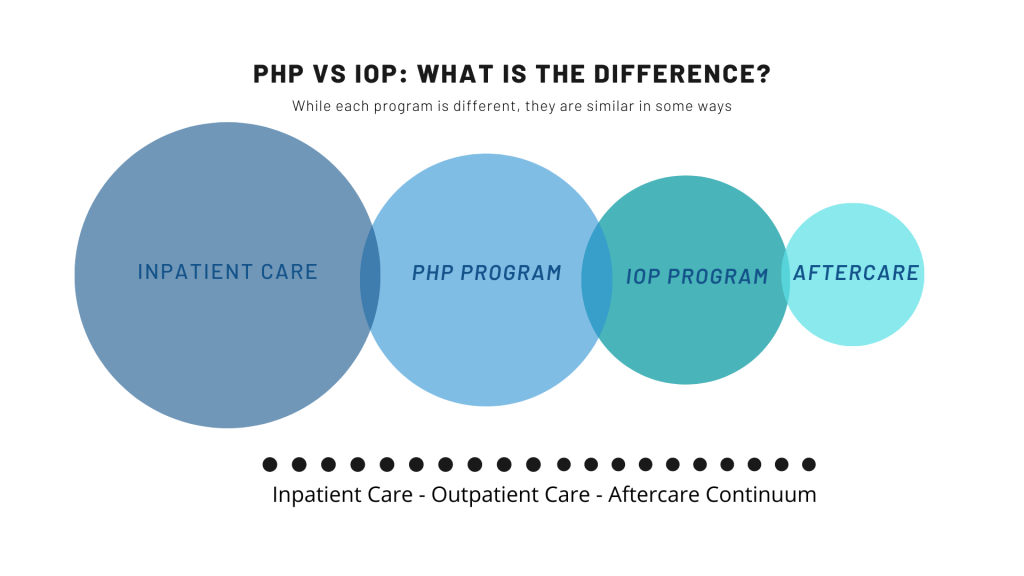
In addiction treatment, the continuum of care is a step-by-step approach designed to meet individuals where they are in their recovery. PHP and IOP sit in the middle of this spectrum:
For many, PHP and IOP serve as the most crucial stages in maintaining momentum after intensive care, ensuring clients don’t feel “thrown back” into daily life without a net.
The Role of Sober Living in PHP and IOP Success
Many clients in PHP and IOP choose to live in sober housing during treatment. This offers:
You can read more about sober living options in our Recovery Housing Guide.
Family Involvement: A Key Success Factor
Research shows that family participation improves treatment outcomes. PHP and IOP often include family therapy sessions, educational workshops, and communication skills training to rebuild trust and strengthen relationships.
Choosing Between PHP and IOP
While both offer structured care, the right choice depends on factors like:
An assessment by a qualified treatment provider—such as Windansea Recovery in La Jolla—can determine the best fit for each individual’s needs.
Why PHP and IOP Are Growing in Popularity
In recent years, more people are choosing PHP and IOP over traditional inpatient care because they balance clinical intensity with real-world practice. They’re particularly effective for individuals who:
Partial Hospitalization Programs and Intensive Outpatient Programs play a critical role in the recovery journey. They provide structure, accountability, and evidence-based care while giving clients the opportunity to start rebuilding their lives outside of a treatment facility.
At Recovery HQ, we partner with trusted treatment centers like Windansea Recovery to ensure individuals have access to the right level of care at the right time. Whether you’re stepping down from residential treatment or looking for an alternative to inpatient care, PHP and IOP can offer the support you need for lasting recovery.
Ready to Explore PHP or IOP?
If you or someone you love is considering PHP or IOP, don’t wait. Call Recovery HQ today at (800) 533-6166 or visit our Treatment Options page to learn more.
The Recovery HQ Team is here to help you!
If you need any help with finding the right treatment center or rehab facility for you or a loved one, the Recovery HQ Team is here to assist you through this difficult time. Please contact our dedicated team and we will do all we can to help.